Why TPO
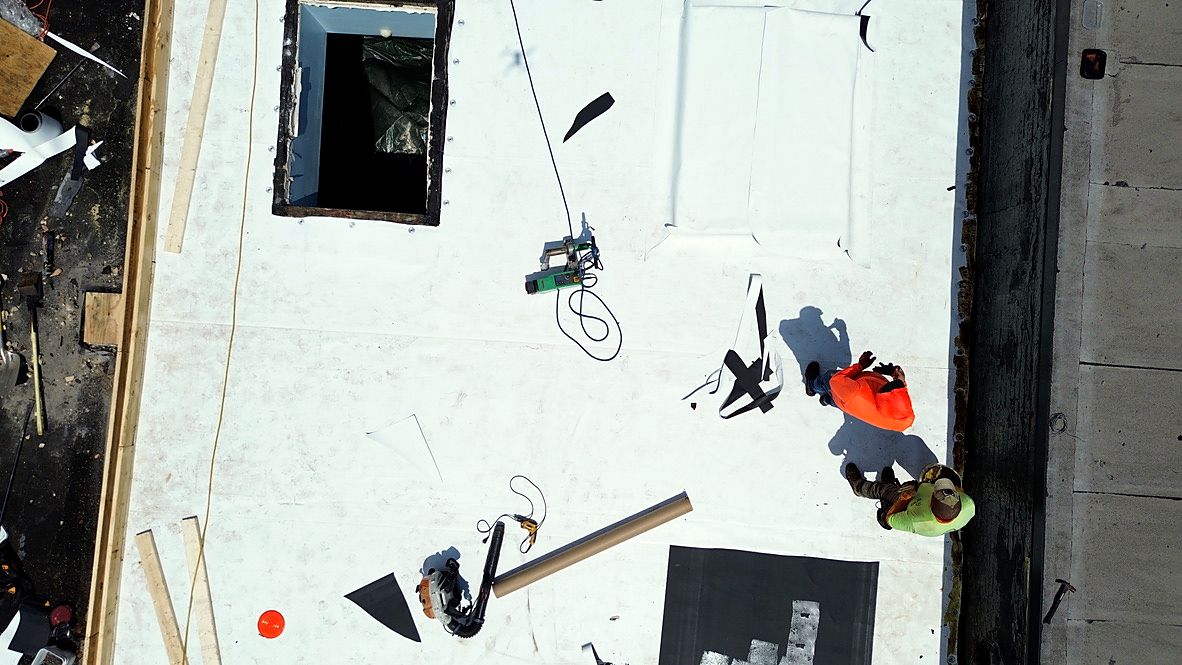
TPO (thermoplastic polyolefin) comes in wide rolls that are mechanically fastened or adhered over insulation, then hot-air welded at every seam. A welded seam becomes one continuous sheet — stronger than the membrane itself — which is why TPO holds up so well against Atlanta's summer storms.
- Reflective white surface keeps rooftop temperatures and cooling loads down through Georgia summers.
- Welded seams instead of glue or tape at laps.
- Cost-effective per square foot compared with PVC and multi-ply systems.
- Recover-friendly — often installed over a dry existing roof with a cover board, skipping tear-off.
What we install
Our TPO roofs are installed with GAF EverGuard 60-mil membrane, backed by a 20-year material warranty and Mosaic's 10-year workmanship warranty. On replacements we design tapered polyiso so water reaches drains and scuppers instead of ponding, and we replace edge metal, curbs and penetration flashings as one system.
Repair, recover or replace?
A TPO roof with a few failed seams or punctures is a repair. A roof that's dry but tired may be a coating or a recover candidate. Wet insulation means the wet areas — or the whole roof — come off. We core the roof before we put a number on it, and every option is priced in writing.
Built around your building
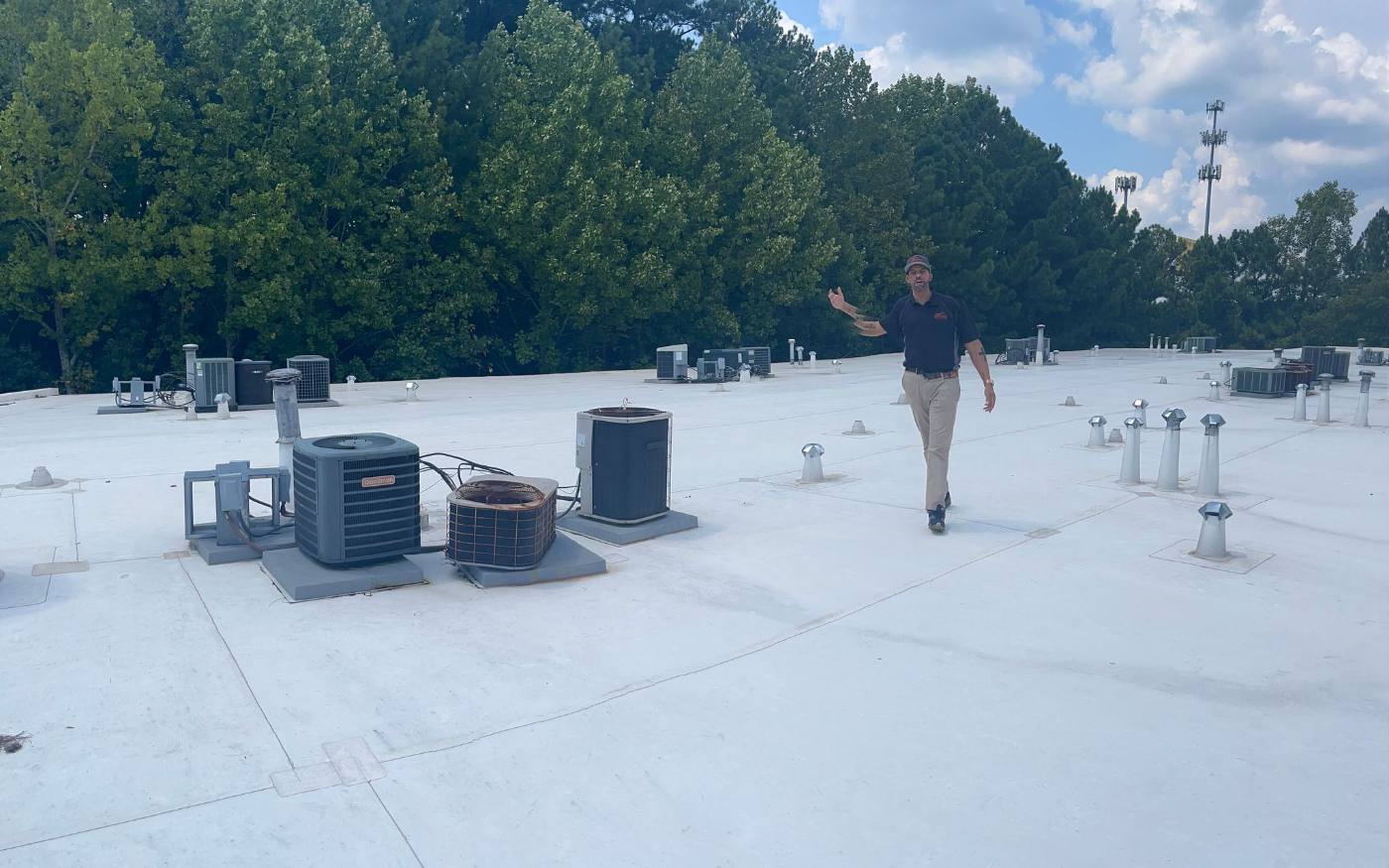
We phase the work, dry in every night, coordinate rooftop units with your HVAC contractor, and protect interior spaces below active work. See how we handle occupied buildings.